
Tuesday, April 29, 2008
Poaching
The trade in rhino horn has been banned by the Convention on International Trade in Endangered Species (CITES) since 1980, but poaching still poses the greatest threat to the species. Rhino horn commands a high price in parts of Asia, especially China, where it is used as a medicine for rheumatism, arthritis and fever. Indian rhino horn is particularly sought after.Rhinos are poached for other reasons too. Rhino horn is also sold as a decorative material. For example, it is used for the carved handles on ceremonial daggers (Jambiyas) worn in some Middle Eastern countries. There is also a lucrative trade in rhino hides and meat.There are two ways to stop poaching. The first is to protect the rhinos by creating reserves with armed patrols to try to prevent poachers getting access to the animals. The second is to reduce demand through outreach educational programmes aimed at traditional medicine practitioners and their patients.
Civil Disturbance
War diverts funds from conservation. High levels of poverty in affected areas increase the likelihood that people will turn to poaching to support their families.In Nepal, the Maoist incursion had a knock-on effect on wildlife protection, and hard-won progress in the preservation of the Indian rhino was jeopardised. (Political changes since January 2007 could help improve the situation.)Unrest in African countries such as Angola, Mozambique, Namibia, Rwanda, Somalia, Sudan and Uganda has taken a heavy toll on rhino populations since the 1960s.
Habitat Loss
Rhinos and other large animals need a sizeable area to support them. If people encroach on their territory (by clearing forests for agriculture or development), the animals are forced into ever smaller pockets. This fragmentation usually results in a shortage of food and a limited gene pool for breeding. Efforts are being made to create wildlife corridors to link remaining rhino areas so the animals are no longer isolated.It is widely recognised that conservation measures work best when the local people are given responsibility for managing wildlife and receive the income from associated tourism. If people are forced to compete with wildlife for scarce resources, human needs will always win out.Another issue associated with habitat loss is that large animal species end up sharing ever smaller areas. It is common for elephants and rhinos to clash with one another if forced into close proximity.
Article Courtesy: BBC
Tuesday, April 29, 2008 0
How has wildlife fared amid the political chaos of Zimbabwe?
Words and images: Stephen Mills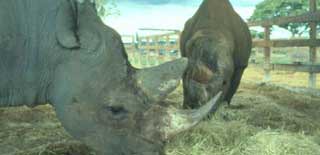
At Mana Pools National Park, in a lodge overlooking the Zambezi River, I am the only one here to listen to the cacophony of frogs in the water below and the groans of lions drifting out from the woods.
Tourism is grinding to a halt. About 85 per cent of the lodges in Hwange and Kariba have closed. The whole country is screwed up with tension, and everyone hopes that life will somehow begin anew after the apocalyptic election in March.
Lack of money not care
I've come to Mana Pools a fortnight after a tragedy. Early one morning, a park patrol ran into a gang of poachers and a gunfight ensued in which one of the park scouts, Dzvaka, was hit in the leg. The team's solar-powered radio transmitter didn't work until sunrise, wasting valuable time. The park's helicopter was grounded because of an unpaid bill, and none of the scouts had first-aid training. They hacked out of the bush, then drove three hours to Kariba hospital. Twenty minutes from town, Dzvaka died.
Zimbabwe and its National Park Service have much to be proud of. Numbers of black rhino, for example, are increasing yearly by 11-12 per cent from a low of 270 in 1993. Yet in every park I visit, there's now a palpable lack of confidence, little equipment and a scarcity of senior officials in the field: the same sort of hesitancy of which the death of Dzvaka was so symptomatic.
Private parklands
A second tier of official conservation is provided by the 'conservancies' - alliances of large, private farms which share their wild animals and the costs of policing them. But, in the current economic and political climate, such huge farms can no longer be held in so few hands. The presence of rhinos no longer provides protection for the owners. Of the four conservancies, two have already been taken over by war veterans, for whom, struggling to earn an unfamiliar living off the land, the animals are free dinners. One conservancy claims that 30,000 animals have already been snared there.
The truth is that nearly everyone in Zimbabwe wants to hunt the animals. To the conservancy farmers, wildlife has always been an asset to be paid for by tourists who want to see or shoot it. For farmer Peter Seymour-Smith, the argument is simple: "At the first whiff of trouble, the tourists vanish, but the hunters still come. We could auction a single hunt for $50,000 - that's a lot of money for conservation. Otherwise, the rhinos are finished. Wildlife cannot survive on charity for ever - sustainable utilisation is the way to ensure its future. A change of government won't reverse matters."
Unless the management of the national parks can be revived and the conservancies spared further fragmentation, much of this nation's wildlife will end up as a last supper.
By Tarra Quismundo
Philippine Daily Inquirer
First Posted 20:01:00 04/29/2008 
MANILA, Philippines -- Half of Naga City submerged along with five eastern towns of the Bicol region, and between 20 million to 30 million turned into environment refugees across the Philippines.
Speaking of the country’s own “inconvenient truth,” environmentalists painted this grim forecast at a conference on climate change and conflict at the Asian Institute of Management's Policy Center on Tuesday.
The scenario may well happen within the century if people continue to disregard the consequences of a warmer planet, they said.
They shared science-backed forecasts of the Philippines at a time when ice caps surrender to a warmer Earth.
Nereus Acosta, convener of the Philippine Climate Change Initiative and former Bukidnon congressman, said a meter higher of sea levels will submerge 15 of the country's 17 regions, with the northern highlands as the only areas spared from the catastrophe.
“The Philippines as an archipelago is considered a climate hotspot ... with 20 out of 80 provinces vulnerable to a one meter rise in sea level,” said Acosta in a presentation before an audience of 60 listeners, among them officers from the environment and energy departments, the academe and non-government organizations.
Acosta said provinces in the Autonomous Region of Muslim Mindanao (ARMM), the Zamboanga Peninsula, Eastern Visayas and the Bicol region, “incidentally those with the higher poverty incidence and greatest food insecurity in the Philippines,” are among places to be worst hit by widespread flooding because of global sea-level rise.
Read more of the article here.
Sunday, April 27, 2008
The message delivered by Bolivia’s indigenous president couldn’t be clearer: “If we want to save the planet, we have to put an end to and eradicate the capitalist model.”
Addressing the Seventh United Nations Indigenous Forum, held in New York on April 21, which this year was focused on the issue of climate change, President Evo Morales stated that this environmental crisis was “not the product of human beings in general, but rather the current inhumane capitalist system, with unlimited industrial development”.
“That is why I feel that it is important to put an end to the exploitation of human beings and to put an end to the pillaging of natural resources; to put an end to destructive wars for raw materials”, Morales said.
As an alternative system, Morales proposed “a communitarian socialism in harmony with Mother Earth”.
The UN forum was the first meeting since the UN passed the Declaration on the Rights of Indigenous People last year. Since then Bolivia has become the first nation to adopt the declaration into its national legal framework and it continues to lead the way on indigenous rights.
During his much-applauded speech, delivered as chief guest at the forum for discussion, Morales outlined his “ten commandments” to save the planet.
The ten commandments are:
- put an end to the capitalist system;
- renounce wars;
- for a world without imperialism or colonialism;
- the right to water;
- development of clean energies;
- respect Mother Earth;
- treat basic services as human rights;
- fight inequalities;
- promote diversity of cultures and economies;
- and live well, not live better at the expense of others.
“In order to avoid hunger and misery”, it is necessary to solve the energy crisis through the development of clean energy such as wind and solar power, Morales said.
Issuing a rallying cry to the estimated 370 million indigenous people around the world, Morales proclaimed: “The indigenous people will not shut up until we achieve a real change.”
Morales told the more than 2,500 indigenous representatives: “It is not possible that some countries have all the power and others not. There exists a United Nations organisation, but if this does not change and democratise itself, then the first nations and indigenous peoples could, instead of the UN, create the Unity of Indigenous Nations of the World.”
He concluded by pointing out the choice that facing humanity was to “follow a life of capitalism and death, or the indigenous path of harmony with Mother Earth and life”.
Article Courtesy: GreenLeft
Readers who read this article also read these:
Sunday, April 27, 2008 0
A growing number of Canadians are harnessing green philosophies and consumption patterns in their new roles as moms
Corinne Willems is a first-time mom and a self-confessed greenie. While pregnant with her son Nikko, now three-and-a-half months old, Willems learned some disturbing facts about the key ingredient in a popular "no tears" baby shampoo that motivated her to go the earth-friendly route and start making her own baby care products.
The "no tears shampoo was basically a normal shampoo," said Willems, 31. "The reason there's no tears is because a certain chemical numbs the tear-ducts so they don't react. I thought, 'That's it, I'm never going to buy it.' "
Willems took a do-it-yourself baby care course. Local educator Cheryl Thielade showed her how to avoid hard-to-pronounce, questionable chemicals that can be found in a large number of baby products.
"She teaches how to make your own cleaning and baby-care products," said Willems.
"It's fascinating to know the history about what's in a lot of these baby products. It's also frightening -- learning some of the chemicals that are in them."
In the months leading up to Nikko's birth, Willems concocted a variety of oils, soaps and shampoos using household ingredients and essential oils such as olive oil, coconut oil and camomile.
Like a growing number of Canadians, Willems is harnessing her earth-friendly philosophies and consumption patterns in her new role as a mom.
A vegetarian who enjoys walking when possible, and takes transit when it's not, she is also a devoted "locavore." Willems and her husband, Matt Craig, try to buy locally harvested fruit and vegetables from farmers markets.
When the time came to outfit Nikko's nursery, Willems went online, attended baby-product swap meets and hit local garage sales to find items that could be reused or recycled.
"Honestly, we weren't all that prepared. We didn't have a crib or anything," Willems explained. "We've got some pretty crafty dads. We converted some cupboards we got at a garage sale into a change table."
One of Willems' favourite shops for previously loved baby wares is Little Earth, a funky store located on East Hastings that has been offering green alternatives to parents since last July.
"The No. 1 issue for most parents is safety when buying products for their children," said Mariska McLean, who co-owns Little Earth with Flavia Spano. "However, parents are way more aware of the environmental impact their choices are making. I think the two really go hand in hand. Choosing safe and sustainable products leads to a safe world for our children to live in."
A tour of Nikko's nursery is a tribute to Willems' ecological, economical and health savings. On the recycled change table sits a refillable box of 7th Generation-brand unbleached baby wipes. Her diapers are also from 7th Generation.
The decor includes hand-me-downs from mothers, aunts and uncles, including a second-hand crib and a pile of wooden toys.
Willems has a "no plastic or petroleum-based toy" policy. From Nikko's closet, she pulls a bag full of plastic and stuffed toys, gifts from friends and family who didn't heed her request for "slightly used" toys.
"Both Matt and I are conscious of buying things that are used to avoid the whole packaging issue and unnecessary production of products that already exist. Walk into Toys "R" Us or any place like that and you're hard-pressed to find anything that doesn't come from very far away."
Very far away was where Julie Catania had to travel just to buy reusable cloth diapers for eight and half month old son.
"We had to buy cloth diapers in Toronto," says the 26-year-old mother of one. "When I was pregnant it was really important to live a healthier lifestyle. You hear all about toxic paints and plastics these days."
After finding it so difficult to find reusable nappies locally, Catania and her husband decided to start Organic Family in their hometown of Cumberland, on Vancouver Island.
The store, which offers green baby and household products, is growing rapidly in its first month in business.
"We haven't done any advertising yet, so business is coming from a lot of word-of-mouth. I belong to a lot of mom-and-tot groups, so I'm spreading the word that way," says Catania.
Organic Family's baby bestsellers include glass milk bottles and Sage Creek organic-cotton baby clothing.
One local business that is finding a niche catering to eco-friendly parents is Green Bean Baby, which creates products made of organic cotton.
"Like a lot of other moms who start a business, it's about finding things you can't find," said Lynne Stapleford, the owner of Green Bean Baby. "When I was pregnant I read about all the chemicals they use to grow cotton."
A former chemical analyst and an ecologist/biologist by trade, Stapleford decided to use the sewing skills her mom and grandmother taught her to start her own business.
Using organic cotton from India and Texas, Stapleford creates very simple, natural-toned flannel blankets, terry-cloth hooded towels and hats.
All of Stapleford's cotton is grown without the use of herbicides, pesticides, defoliants or other chemicals. The cotton that comes from Texas is USDA organic certified, while the cotton from India is certified organic by the Global Organic Textile Standards (GOTS).
With the average baby going through approximately 6,000 diapers before potty training finally kicks in, according to the environmental website www.treehugger.com, there is a lot of debate around the pros and cons of reusable diapers and biodegradable disposables. For the consumer, there are increasingly more options.
Capers/Whole Foods sell 7th Generation diapers, which are made from chlorine-free, latex-free materials. Meanwhile, shops in Kitsilano such as Baby's World and Hip Baby sell both cloth and disposable, toxin-free diapers.
Fourth Avenue in Kitsilano is sometimes called "Mommy Row" for its collection of maternity and baby shops. Every shop visited by The Vancouver Sun recently -- including Crocodile Baby, Hip Baby, Craftworks, Brier's Home and Gift, Baby's World and Moule -- offered a wide selection of environmentally friendly baby wares, including locally made green products from Green Bean Baby and Mother Earth.
5 STEPS TO GREEN YOUR BABY
1. Diapers: Use biodegrable disposables like gDiaper hybrid (reusable shell, flushable, biodegradable liner). Wash cloth diapers at a low temperature.
2. Breastfeed: Use reusable, organic cotton breast pads and locally made nipple creams from natural ingredients.
3. Solid foods: Reuse/recycle baby food jars, puree organic/local, cooked foods and freeze using ice cube trays.
4. Clothing: Babies are constantly getting their clothes wet in one way or another. Ensure that clothes are dyed using natural dyes to prevent hurting sensitive baby skin.
5. Body care/bath time: Olive oil is the best all-round oil to use on everything from diaper rash to cradle cap; also use organic, natural, fragrance free.
Source: www.treehugger.com
Article Courtesy: The Vancouver SunReaders who read this article also read these:
Saturday, April 26, 2008
Greenhouse gases on the increase
Major greenhouse gases are accumulating faster than in the past despite efforts to curtail their increase.
Carbon dioxide concentration in the air increased by 2.4 parts per million last year, the National Oceanic and Atmospheric Administration reported Wednesday; methane concentrations also rose.
Global concentration of carbon dioxide is now nearly 385 ppm. Carbon dioxide levels hovered around 280 ppm until 1850. Methane in the atmosphere rose by 27 million tons last year after nearly a decade with little or no increase, according to a NOAA researcher.
This article is a part of article published in Los Angeles Times. To view the full article click here.
Saturday, April 26, 2008 1
Humanity's brush with extinction
Human beings may have had a brush with extinction 70,000 years ago, an extensive genetic study suggests.
The human population at that time was reduced to small isolated groups in Africa, apparently because of drought, according to an analysis published Thursday in the American Journal of Human Genetics.
The report noted that a separate study estimated that the number of early humans may have fallen as low as 2,000 before numbers began to expand again.
This article is a part of article published in Los Angeles Times. To view the full article click here.
------------------------------------------------------------------
WITH dire warnings about environmental destruction, looming food shortages and international strife, it often feels humanity is on the brink of dying out.
But an extensive new genetic study now suggests that humans may already have had a brush with extinction during the Stone Age, 70,000 years ago.
The number of early humans may have shrunk as low as 2,000 before numbers began to expand again in the early stone age, according to an analysis released today.
It claims genetic evidence suggests that catastrophic environmental conditions occurred which pushed early man to the same status as the dodo. Today, more than 6.6 billion people inhabit the globe.
Previous studies using mitochondrial DNA (mtDNA) – which is passed down through mothers – have traced modern humans to a single "mitochondrial Eve", who lived in Africa about 200,000 years ago.
The migration of humans out of Africa to populate the rest of the world appears to have begun about 60,000 years ago, but little has been known about humans between "Eve" and that dispersal.
The new study, published in the American Journal of Human Genetics, looks at the mitochondrial DNA of the Khoi and San people in South Africa which appear to have diverged from other people between 90,000 and 150,000 years ago, making them a unique source of DNA evidence.
The Khoi people dominated the subcontinent for millennia before the appearance of groups, and still exist today as a distinct tribe. They are considered to be a people which has preserved the original human lifestyle along with genetics.
The San, also known as Bushmen, have a similarly ancient lineage, with archeological evidence that they had an advanced early culture stretching back as far as 20,000 years ago.
The researchers, led by Doron Behar of Rambam Medical Centre in Haifa, Israel and Saharon Rosset of IBM TJ Watson Research Centre in New York, and Tel Aviv University concluded humans separated into small populations prior to the Stone Age, when they came back together and began to increase in numbers and spread to other areas.
Eastern Africa experienced a series of severe droughts between 135,000 and 90,000 years ago and the researchers said this climate shift may have contributed to the population changes, dividing into small, isolated groups which developed independently of one another.
As they assert in their report: "The study of extant genetic variation in African populations with complete mtDNA sequences provides an insight into past Homo sapiens demographics, suggesting that small groups of early humans remained in geographic and genetic isolation until migrations during the late Stone Age."
They add: "Though the archeological record from this period is too poor to reliably identify reasons for the split(s), recent studies show that the sporadic settlements of Homo sapiens in north-west Africa, the Near East, Chad, and southern Africa may have been caused by stressful climatic fluctuations known to have occurred throughout the mid-Stone Age."
Meave Leakey, a palaeontologist and adviser on the Genographic Project, launched in 2005 to study anthropology using genetics, said: "Who would have thought that as recently as 70,000 years ago, extremes of climate had reduced our population to such small numbers that we were on the very edge of extinction."
GREAT LEAP FORWARD FOR HUMANITY
THE year 68,000BC saw the beginning of a European Ice Age – known technically as the Wurm Glaciation – which meant humans endured a long cold snap.
By then, Neanderthals had spread out over much of Europe and western Asia, and it was about this time that Aboriginal tribes are thought to have started arriving in Australia, with other tribes appearing in South America.
Two Neanderthal skulls from France dated to this time revealed man had a hypoglossal canal the size of modern humans, which indicates they were most likely to be capable of speech. This period saw a great leap forward in human development, marked by the use of the first stone tools, and jewellery. It seems humans had also begun to paint and it is thought they were using symbols to communicate.
The article was been published in Scotsman. To see the full article click here.
A full recovery of the stratospheric ozone hole could modify climate change in the Southern Hemisphere and even amplify Antarctic warming, according to scientists from the University of Colorado at Boulder, the National Oceanic and Atmospheric Administration and NASA, according to a press release issued by EurekAlert.
While Earth's average surface temperatures have been increasing, the interior of Antarctica has exhibited a unique cooling trend during the austral summer and fall caused by ozone depletion, said Judith Perlwitz of the Cooperative Institute for Research in Environmental Sciences, a joint institute of CU-Boulder and NOAA. "If the successful control of ozone-depleting substances allows for a full recovery of the ozone hole over Antarctica, we may finally see the interior of Antarctica begin to warm with the rest of the world," Perlwitz said.
Perlwitz is lead author of a new study on the subject to be published April 26 in Geophysical Research Letters. Co-authors include Steven Pawson and Eric Nielson of NASA's Goddard Space Flight Center in Greenbelt, Md., and Ryan Fogt and William Neff of NOAA's Earth System Research Laboratory in Boulder. The study was supported by NASA's Modeling and Analysis Program.
The authors used a NASA supercomputer model that included interactions between the climate and stratospheric ozone chemistry to examine how changes in the ozone hole influence climate and weather near Earth's surface, said Perlwitz.
The study authors calculated that when stratospheric ozone levels return to near pre-1969 levels by the end of the 21st century, large-scale atmospheric circulation patterns now shielding the Antarctic interior from warmer air masses to the north will begin to break down during the austral summer. The circulation patterns are collectively known as a positive phase of the Southern Annular Mode, or SAM.
The scientists found that as ozone levels recover, the lower stratosphere over the polar region will absorb more harmful ultraviolet radiation from the sun. This could cause air temperatures roughly 6 to 12 miles above Earth's surface to rise by as much as 16 degrees Fahrenheit, reducing the strong north-south temperature gradient that currently favors the positive phase of SAM, said the research team.
The supercomputer modeling effort also indicated that ozone hole recovery would weaken the intense westerly winds that currently whip around Antarctica and block air masses from crossing into the continent's interior. As a result, Antarctica would no longer be isolated from the warming patterns affecting the rest of the world.
NASA's Pawson said ozone recovery over Antarctica would essentially reverse summertime climate and atmospheric circulation changes that have been caused by the presence of the ozone hole. "It appears that ozone-induced climate change occurred quickly, over 20 to 30 years, in response to the rapid onset of the ozone hole," he said. "These seasonal changes will decay more slowly than they built up, since it takes longer to cleanse the stratosphere of ozone-depleting gases than it took for them to build up."
The seasonal shift in large-scale circulation patterns could have repercussions for Australia and South America as well. Other studies have shown that the positive phase of SAM is associated with cooler temperatures over much of Australia and increased rainfall over Australia's southeast coastline.
During late spring and early summer, the positive phase of SAM also is associated with drier conditions in South America's productive agricultural areas like Argentina, Brazil, Uruguay and Paraguay, said Perlwitz. If ozone recovery induces a shift away from a positive SAM, Australia could experience warmer and drier conditions while South America could get wetter, she said.
But just how influential a full stratospheric ozone recovery will be on Southern Hemisphere climate largely depends on the future rate of greenhouse gas emissions, according to the GRL authors. Projected increases in human-emitted greenhouse gases like carbon dioxide will be the main driver for strengthening the positive phase of SAM.
"In running our model simulations, we assumed that greenhouse gases like carbon dioxide would double over the next 40 years and then slowly level off," said Perlwitz. "If human activities cause more rapid increases in greenhouse gases, or if we continue to produce these gases for a longer period of time, then the positive SAM may dominate year-round and dwarf any climatic effects caused by ozone recovery."
Article Courtesy: The Hindu
Polar bear faces risk, not extinction says Canadian advisory panel as reported by The Age.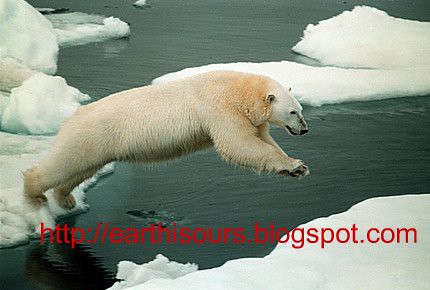
THE polar bear, a symbol of Canada's far north and of the effects of climate change on the Arctic, is in trouble but not endangered, a Canadian advisory panel says.
The Committee on the Status of Endangered Wildlife in Canada gave the polar bear its weakest classification, that of "special concern", but said the Canadian Government would nonetheless have to develop a management plan to protect the animals if it agreed with the new label.
Jeffrey Hutchings, chairman of the independent committee, said there was insufficient reason to think the polar bear was at imminent risk of extinction, but "that's not to say that it's not in trouble", with a need for legislative action if the Government included it on the legal list.
Canada has an estimated 15,500 polar bears, roughly two-thirds of the global population. Disappearing summer sea ice is causing a decline in numbers in some areas, but in others they are stable or rising.
Environment Minister John Baird said Ottawa should take action before the animal got a "threatened" designation, which would require bans on hunting and on destruction of habitat. Canada's Arctic Inuit people say restricted hunting should continue.
REUTERS
<><><><><><><><><><><><><><><><><><><><><><><><><><>
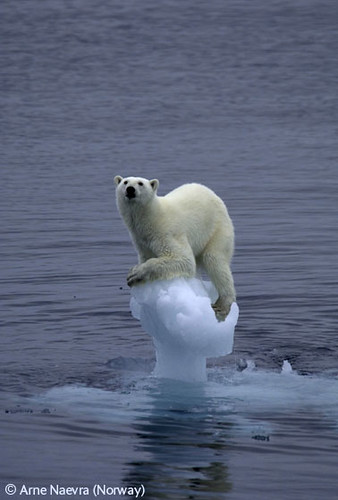
But with the image just above becoming common it is very easy to spot out that they are in real trouble.
Though this may the case, Polar bears are really in trouble. They are the one of the first species of animals suffering from what the human race done to the planet. It is well known fact that due to the increase in pollution in atmosphere the earth is heating up. Due to this effect the ice masses in whole of the planet is melting down. Slowly polar bears are losing their homes.
It is not very far that they are going to be extinct.
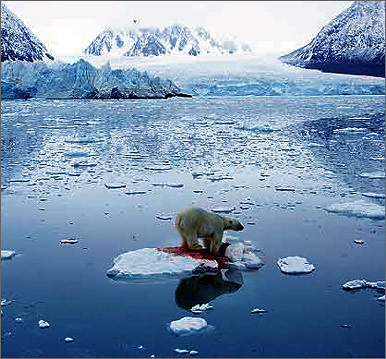
The new generations of bears have to face the music, the cause which they are unaware.
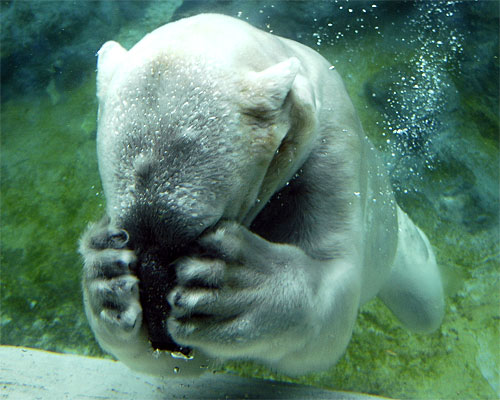
WE SHOULD NOT BE CRUEL to any species in this kind. THINK TWICE BEFORE YOU ARE INCREASING YOUR CARBON FOOTPRINT.
SAVE THE ANIMALS, SAVE THE HUMAN RACE, SAVE THE PLANET.
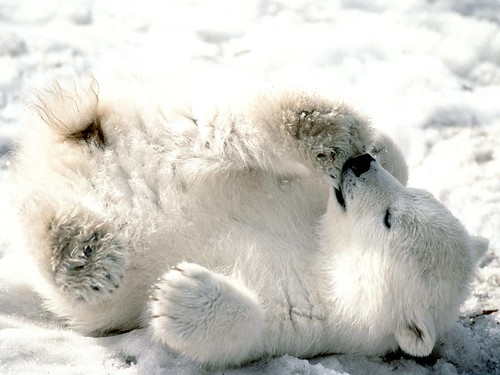
SHOW THEM MERCY, AFTER ALL IT'S ALSO THEIR PLANET...
Friday, April 25, 2008





Readers who read this topic also read the following:
Humanity's brush with extinction
Tips that can help save environmental change
Polar bear faces extinction/risk
Friday, April 25, 2008 0
Save the tigers. They are in the verge of extinction.
Not only tigers, but following them might be humans in the ecosystem of extinction. In the tight loop of earning money, or following luxuriated lifestyle we HUMANS have forgotten something. The tiger being in the verge of extinction is a reminder of that we could end any time
Well don't ask how to save the animals. But you can take precautions of saving not just tigers but maybe all animals. These are the simple precautions you can take:
- 1. While buying any items check what it is made of. If it contains any small presence of any animal in it, stop buying
- 2. If you happen to see or listen any illegal activities against any animals, try stopping it. If unsuccessful call up your friends and unite together to stop such activities for a noble cause.
3. Make your friends, relatives and all those who can listen to you aware that the animals being extinct causes us difficulties (if not today, tomorrow) some how. Ask them to spread the same message.
4. If anyone says that they are troubled by animals, softly say you have intruded in their place. They are just looking for their homes and not disturbing you.
5. Initiate some activities which can protect the species from extinction.
For now, DO THIS!!! Please...
Readers who read this topic also read the following:
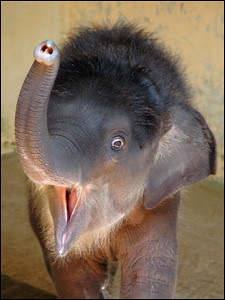
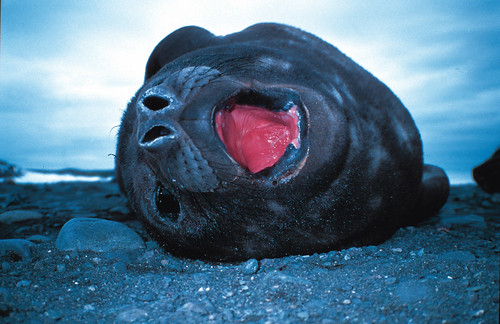
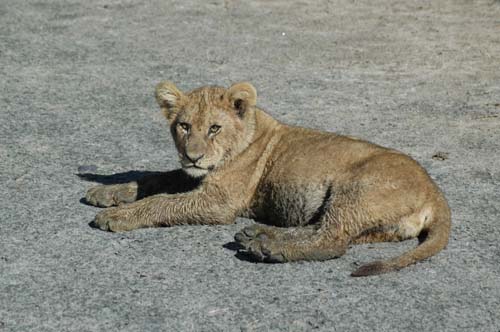
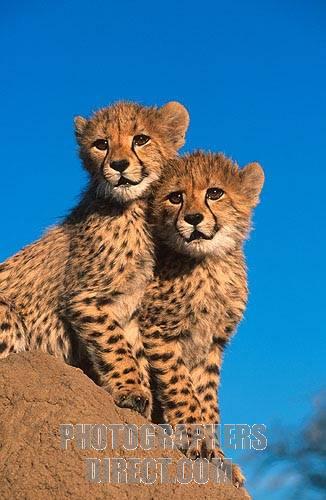
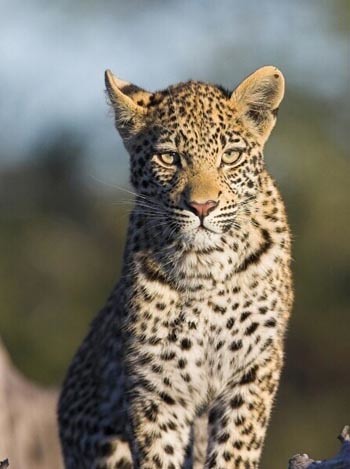
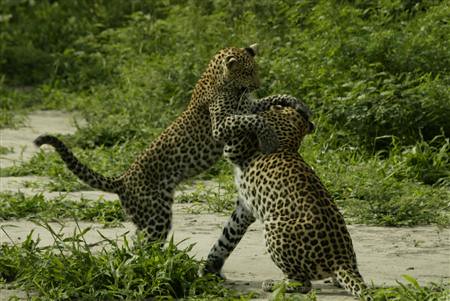
Watch beautiful pictures of young cubs of various animals.
Polar bears follows in the route of tiger., they might be well in the path to extinction.
How do marine turtles return to same beach to lay their eggs.
By PATRICK MOORE
April 22, 2008; Page A23
Mr. Moore, co-founder and former leader of Greenpeace, is chairman and chief scientist of Greenspirit Strategies.
In 1971 an environmental and antiwar ethic was taking root in Canada, and I chose to participate. As I completed a Ph.D. in ecology, I combined my science background with the strong media skills of my colleagues. In keeping with our pacifist views, we started Greenpeace.
But I later learned that the environmental movement is not always guided by science. As we celebrate Earth Day today, this is a good lesson to keep in mind.
At first, many of the causes we championed, such as opposition to nuclear testing and protection of whales, stemmed from our scientific knowledge of nuclear physics and marine biology. But after six years as one of five directors of Greenpeace International, I observed that none of my fellow directors had any formal science education. They were either political activists or environmental entrepreneurs. Ultimately, a trend toward abandoning scientific objectivity in favor of political agendas forced me to leave Greenpeace in 1986.
The breaking point was a Greenpeace decision to support a world-wide ban on chlorine. Science shows that adding chlorine to drinking water was the biggest advance in the history of public health, virtually eradicating water-borne diseases such as cholera. And the majority of our pharmaceuticals are based on chlorine chemistry. Simply put, chlorine is essential for our health.
My former colleagues ignored science and supported the ban, forcing my departure. Despite science concluding no known health risks – and ample benefits – from chlorine in drinking water, Greenpeace and other environmental groups have opposed its use for more than 20 years.
Opposition to the use of chemicals such as chlorine is part of a broader hostility to the use of industrial chemicals. Rachel Carson's 1962 book, "Silent Spring," had a significant impact on many pioneers of the green movement. The book raised concerns, many rooted in science, about the risks and negative environmental impact associated with the overuse of chemicals. But the initial healthy skepticism hardened into a mindset that treats virtually all industrial use of chemicals with suspicion.
Sadly, Greenpeace has evolved into an organization of extremism and politically motivated agendas. Its antichlorination campaign failed, only to be followed by a campaign against polyvinyl chloride.
Greenpeace now has a new target called phthalates (pronounced thal-ates). These are chemical compounds that make plastics flexible. They are found in everything from hospital equipment such as IV bags and tubes, to children's toys and shower curtains. They are among the most practical chemical compounds in existence.
Phthalates are the new bogeyman. These chemicals make easy targets since they are hard to understand and difficult to pronounce. Commonly used phthalates, such as diisononyl phthalate (DINP), have been used in everyday products for decades with no evidence of human harm. DINP is the primary plasticizer used in toys. It has been tested by multiple government and independent evaluators, and found to be safe.
Despite this, a political campaign that rejects science is pressuring companies and the public to reject the use of DINP. Retailers such as Wal-Mart and Toys "R" Us are switching to phthalate-free products to avoid public pressure.
It may be tempting to take this path of least resistance, but at what cost? None of the potential replacement chemicals have been tested and found safe to the degree that DINP has. The Consumer Product Safety Commission recently cautioned, "If DINP is to be replaced in children's products . . . the potential risks of substitutes must be considered. Weaker or more brittle plastics might break and result in a choking hazard. Other plasticizers might not be as well studied as DINP."
The hysteria over DINP began in Europe and Israel, both of which instituted bans. Yet earlier this year, Israel realized the error of putting politics before science, and reinstated DINP.
The European Union banned the use of phthalates in toys prior to completion of a comprehensive risk assessment on DINP. That assessment ultimately concluded that the use of DINP in infant toys poses no measurable risk.
The antiphthalate activists are running a campaign of fear to implement their political agenda. They have seen success in California, with a state ban on the use of phthalates in infant products, and are pushing for a national ban. This fear campaign merely distracts the public from real environmental threats.
We all have a responsibility to be environmental stewards. But that stewardship requires that science, not political agendas, drive our public policy.
News courtesy:
http://online.wsj.com/article/SB120882720657033391.html
Wednesday, April 23, 2008
Much can be learned about the condition of the planet's environment by looking at sea turtles. They have existed for over 100 million years, and they travel throughout the world's oceans. Suddenly, however, they are struggling to survive -- largely because of things people are doing to the planet's oceans and beaches. But what does this mean for the human species?
It is possible that a world in which sea turtles can not survive may soon become a world in which humans struggle to survive. If, however, we learn from our mistakes and begin changing our behavior, there is still time to save sea turtles from extinction. In the process, we will be saving one of the earth's most mysterious and time-honored creatures. We might just be saving ourselves too.
Major ecological effects of sea turtle extinction
1. Sea turtles, especially green sea turtles, are one of the very few animals to eat sea grass. Like normal lawn grass, sea grass needs to be constantly cut short to be healthy and help it grow across the sea floor rather than just getting longer grass blades. Sea turtles and manatees act as grazing animals that cut the grass short and help maintain the health of the sea grass beds. Over the past decades, there has been a decline in sea grass beds. This decline may be linked to the lower numbers of sea turtles.
Sea grass beds are important because they provide breeding and developmental grounds for many species of fish, shellfish and crustaceans. Without sea grass beds, many marine species humans harvest would be lost, as would the lower levels of the food chain. The reactions could result in many more marine species being lost and eventually impacting humans. So if sea turtles go extinct, there would be a serious decline in sea grass beds and a decline in all the other species dependant upon the grass beds for survival. All parts of an ecosystem are important, if you lose one, the rest will eventually follow.
2. Beaches and dune systems do not get very many nutrients during the year, so very little vegetation grows on the dunes and no vegetation grows on the beach itself. This is because sand does not hold nutrients very well. Sea turtles use beaches and the lower dunes to nest and lay their eggs. Sea turtles lay around 100 eggs in a nest and lay between 3 and 7 nests during the summer nesting season. Along a 20 mile stretch of beach on the east coast of Florida sea turtles lay over 150,000 lbs of eggs in the sand. Not every nest will hatch, not every egg in a nest will hatch, and not all of the hatchlings in a nest will make it out of the nest. All the unhatched nests, eggs and trapped hatchlings are very good sources of nutrients for the dune vegetation, even the left over egg shells from hatched eggs provide some nutrients.
Dune vegetation is able to grow and become stronger with the presence of nutrients from turtle eggs. As the dune vegetation grows stronger and healthier, the health of the entire beach/dune ecosystem becomes better. Stronger vegetation and root systems helps to hold the sand in the dunes and helps protect the beach from erosion. As the number of turtles declines, fewer eggs are laid in the beaches, providing less nutrients. If sea turtles went extinct, dune vegetation would lose a major source of nutrients and would not be as healthy and would not be strong enough to maintain the dunes, resulting in increased erosion. Once again, all parts of an ecosystem are important, if you lose one, the rest will eventually follow.
Sea turtles are part of two ecosystems, the beach/dune system and the marine system. If sea turtles went extinct, both the marine and beach/dune ecosystems would be negatively affected. And since humans utilize the marine ecosystem as a natural resource for food and since humans utilize the beach/dune system for a wide variety of activities, a negative impact to these ecosystems would negatively affect humans.
What is Extinction?
A plant or animal becomes extinct when the last living individual of its species dies, causing it to vanish from the earth forever. If there is ever a time when the last green turtle on earth dies, then never again will this magnificent creature grace our world.
Species have been going extinct for millions of years; it is a natural part of the evolutionary process. For example, most of the species that existed during the time of dinosaurs have perished. Many probably went extinct because of sudden geological or climatic changes -- possibly because of a large volcanic eruption or because of a giant meteor hitting the earth. Today, however, species are going extinct because of abrupt changes brought about by humans. Habitat destruction, pollution and overconsumption are causing species to decline at a rate never before seen in history. This loss of species is eroding the diversity of life on earth, and a loss of diversity can make all life vulnerable.
Courtesy: Caribbean Conservation Corporation & Sea Turtle Survival League
Wednesday, April 23, 2008 0
ScienceDaily (Mar. 8, 2007) — Marine turtles almost always return to the same beach to lay their eggs. The egg-laying sites are often far from the feeding areas and the females cross several hundred kilometers of ocean with no visual landmarks. How do they manage to return to the same spot?
A study by Simon Benhamou of the Center for Functional and Evolutionary Ecology at Montpellier1, France, together with other groups (CNRS, IRD, IFREMER, CEDTM2, University of Pisa), shows that the marine turtles use a relatively simple navigation system involving the earth's magnetic field, and this allows them to return to the same egg-laying site without having the ability to correct for the deflection of ocean currents. This work, published in Current Biology and Marine Ecology Progress Series, should allow better conservation strategies for this endangered species.
Every 4 years, on average, Indian Ocean green turtles (Chelonia mydas) travel hundreds of kilometers to specific egg-laying areas, where they will lay 4 to 6 successive clutches. To better understand the navigation process and the sensory channels involved in this long-distance oceanic travel, the researchers have conducted a multidisciplinary study, involving biology and physical oceanography, in two series of experiments. In the Mozambique Channel, between the east coast of Africa and Madagascar, on the beaches of the French Islands of Europa and Mayotte, they caught turtles at the beginning of their egg-laying cycle, so that the animals were strongly impelled to return to this area to complete their cycle. After having Argos transmitters fitted to their shells in order to satellite track their return journey to the beach, the animals were released in open sea, several hundred kilometers from the egg-laying site.
The first experiment was to study the navigation system of the marine turtles and discover how they detect the ocean currents: are the turtles' movements controlled by the currents or can they use them to their benefit? The study has shown that the marine turtles' navigation system allows them to maintain their course towards the egg-laying site wherever they find themselves. It is almost as if they were equipped with a compass pointing towards the beach in question. So they can correct any deflection they are subject to: transport by boat, ocean currents... But, unlike human navigators, they are not able to correct for ocean drift in plotting their course. So the movements recorded by the satellite are a combination of deliberate action by the turtles and the effect of currents. So it appears that the turtles' navigation system is relatively simple and may cause them to be wander at sea for long periods during adverse ocean conditions. One turtle released 250 km from its egg-laying site on Europa traveled more than 3 500 km in two months before returning there!
In the second experiment, the researchers have studied the effect of the earth's magnetic field on the turtles' navigation system. They have shown, for the first time in natura, that marine turtles use the magnetic field of the earth to orientate themselves. When this field is disturbed by placing a powerful magnet on their heads, turtle navigation is not as good. But the fact that they can still return to their original egg-laying site shows that the geomagnetic field is not the only information source that they use. Researchers think the turtles may also use their sense of smell like certain sea birds or homing pigeons. This hypothesis remains to be proven...
This work should improve conservation strategies for marine turtles, an endangered, officially protected species, by providing a better understanding of how they manage these long migrations between egg-laying and feeding areas.
Adapted from materials provided by CNRS, via EurekAlert!, a service of AAAS.
Sincere courtesy to:
Tuesday, April 22, 2008
TRY: Buying powdered instead of liquid laundry detergent
OR TRY: Making your own laundry detergent
ALSO: Hang your clothes out to dry this summer instead of using a dryer.
SAVES THE EARTH: Powdered detergent is easier to rinse away than liquid and is more efficient for your washing machine, making for less energy used and cleaner water.
SAVES YOU: A lot of money. Making your own detergent is more cost-effective than buying it. Find recipes for both liquid and powder homemade detergents with a simple Google search for "detergent recipes." Save on your energy bill by not running the dryer in nice weather and hanging clothes out to dry instead. Another bonus: They usually smell great. Check out www.laundrylist.org, a site devoted to air-drying clothes, for more information.
TRY: Planting a vegetable garden this summer. You need not have land for this. Plant them inside pots. They will do marvel for you.
SAVES THE EARTH: You'll get food directly from your porch or back yard that ordinarily would be transported to your nearest supermarket using fuel.
SAVES YOU: Money -- Food prices are rising by the day. Vegetable and herb seeds are only a small sum of amount for a whole summer's supply of each.
TRY: Using cleaning products with natural, non-toxic ingredients in your home.
SAVES THE EARTH: Using non-toxic cleansers means less hazardous materials make it into the water and into landfills.
SAVES YOU: For households with children, using non-toxic products on surfaces is safer and healthier. Making your own cleansers from ingredients like vinegar and baking soda is much cheaper than buying a pre-made product as well. (Check out www.vinegartips.com for more ideas).
TRY: Bringing a reusable cloth bag to the store instead of taking paper or plastic bags at the checkout.
OR TRY: Re-using your plastic store bags as garbage bags for the small garbage cans in your home, rather than buying separate garbage bags.
SAVES THE EARTH: less plastic in a landfill, saves recycling costs, production costs and emissions used to make paper and plastic bags, prevents litter.
SAVES YOU: money (some stores give a discount for bringing your own bag), the annoyance of having too many plastic bags in your cabinets and closets; your groceries shifting and rolling out of their plastic bags in the car as you drive home from the store.
TRY: Instead of driving, walk or ride a bike for short trips around the neighborhood.
SAVES THE EARTH: Using foot power for short trips means less carbon emissions from your car.
SAVES YOU: Gas money, and you can burn a few extra calories.
Tuesday, April 22, 2008 0
Wednesday, April 16, 2008
By Helen Briggs Science reporter, BBC News
---
An ancient ancestor of the elephant from 37 million years ago lived in water and had a similar lifestyle to a hippo, a fossil study has suggested.
The animal was said to be similar to a tapir, a hoofed mammal which looks like a cross between a horse and a rhino.
Experts from Oxford University and Stony Brook University, New York, analysed chemical signatures preserved in fossil teeth.
These indicated that the animal grazed on plants in rivers or swamps.
The study, published in Proceedings of the National Academy of Sciences, could shed light on the lifestyle and behaviour of modern elephants.
Dr Erik Seiffert, co-author of the study, told BBC News: "It has often been assumed that elephants have evolved from fully terrestrial ancestors and have always had this kind of a lifestyle.
"Now we can really start to think about how their lifestyle and behaviour might have been shaped by a very different kind of existence in the distant past.
"It could help us to understand more about the origins of the anatomy and ecology of living elephants."
Eocene mammals
DNA evidence suggests that elephants are related to seagoing manatees and dugongs, and another land-based mammal, the rabbit-like hyrax.
This led to the theory that elephants and their extinct relatives may have evolved from a water-dwelling ancestor.
Scientists in the UK and the US looked at fossil teeth of two species that belong to an extinct family of mammals related to the elephant and, more distantly, the sea cow. They lived in northern Egypt during the Eocene Epoch, about 37 million years ago.
Alexander Liu of the University of Oxford and Erik Seiffert of Stony Brook University, New York, analysed the patterns of different oxygen and carbon atoms, or isotopes, laid down in tooth enamel to investigate the lifestyle and diet of the creatures.
The isotopic signals suggest that Barytherium and Moeritherium, as they are called, were largely aquatic, feeding on freshwater vegetation in rivers or swamps.
At the time the deserts of northern Egypt, where the teeth were unearthed, were covered by sub-tropical rainforest and swamps.
Amphibious lifestyle
Dr Erik Seiffert told BBC News: "The isotopic pattern preserved in their teeth is very similar to that of living aquatic mammals.
"It supports the hypothesis that, at some point early in the evolution of elephants, these animals were very dedicated to either a fully aquatic or amphibious lifestyle - they probably spent most of their life in water."
Co-author Alexander Liu said the animal was not completely aquatic, since it lacked adaptations like a "stream-lined body or flipper-like limbs".
He said: "It seems that [Moeritherium] was almost certainly an animal that ate freshwater plants and led a semi-aquatic lifestyle, similar to that of hippos."
It is not clear how and why the ancestor of elephants left the water for a life on land. One theory is that a cooling event at the end of the Eocene dried up swamps and rivers, forcing animals out on to the land.
"There's little real evidence yet to suggest that's true," said Alexander Liu. "We've got an awful lot of pieces in the puzzle; if we could find one more example of an aquatic or semi-aquatic elephant that would be extremely convincing."
News Courtesy: BBC
Wednesday, April 16, 2008 0

